This is an extract from the book:
'My Cube Puzzles' - Chapter 5. 'The Story behind Snafooz' by Dirk Laureyssens.
' ......
The positive reactions on the Happy Cube puzzles during the Premium Incentive
Show New York 1989 showed that US buyers understood that the Happy
Cube (former I.Q.ube) was a great winner.
The upcoming US fair would be the real start. So we attended the New York
Toy Fair 1990 (16-19 Feb. 1990). We had booth 6048. Once
the fair started several people told us there was another
company showing the same puzzles. That was impossible ! I went to
the spot and indeed a company, called IDEA GROUP, exhibiting my own puzzles!
Identical ! My puzzles were called 'Snafooz' ! I never had seen the guys.
I warned them and asked them to stop immediately exhibiting, told them it
was a protected item. They refused and told me they had the exclusive distribution
for the USA. I told them I was the inventor and full owner and that I never
gave them any rights. They told they bought them from the Arista Group.
I told them they 'bought the Brooklyn Bridge'. On my stand I informed visitors
I was the owner of the US-copyrights and that the Idea Group "Snafooz"
was a knock-off. Richard Frohman and Ben Cohen came - secretly wired - to
my booth to see my puzzles and accused me calling them thieves. They took
pictures too. Finally I asked the Toy Fair Management to kick-off Idea Group
from the fair but due 'reasons' they could not do so. My Patent agent Darby
& Darby was not available at that time. I sent a registered letter to
Idea Group and tried to make the best of the unpleasant situation.
After some indirect contacts between my US agent and Idea Group , in an
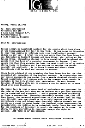
attempt to solve this situation, I received next fax on March 19, 1990.
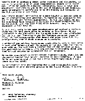
(click on the images to read the full size/text or see the extract below):
--- begin of fax ---
LOGO: Idea-Group Inc.
Monday , March 19, 1990
Dear Mr. Laureyssens,
Please accept my heartfelt apology for the event which took place at the
International Toy Fair in New York. It was never my intention to copy your
puzzle or infringe upon your intellectual property rights in any way. I
trust you are now aware that the Idea Group Inc was defrauded by Richard
Proumen and Gary Miner, who, acting as the Arista Group, themselves claimed
to have conceived and developed the puzzle with the help of a computer programmer
in Europe. I can assure you that this episode has been the most troubling
of my entire thirty years in business and I am anxious to resolve the matter
promptly and equitable. As to Mssrs Proumen and Miner, these individuals
will be sued and brought to account.
Since being advised of our mistake, the Idea Group has for the time suspended
all promotion of the Snafooz product. We acknowledge that our puzzle apparently
was copied from a sample obtained through your French distributor or licensee
and, in its present form, cannot be marketed in the U.S. without your permission.
We are, however, desirous of meeting with you to discuss a way to permit
us to move ahead with your blessing.
.... (text) ....
In anticipation of new beginning for us and a successful sales development
of your creative genious in the United States, I remain,
Very truly yours,
sign.
Richard A. Frohman
President.
--- end of fax ---
Since Idea Group wanted to manufacturer themself (in South Korea) and just
pay a small royalty to me, this possible co-operation never started. I wanted
to control the manufacturing process myself since we have our own production
facilities.
During the 1991 New York Toy Fair - the year after - the Idea Group exhibited
six reshaped 'Sanfooz puzzles' using six segments
in stead of the five segments of my original concept. To do so - as Bob
Stevens told - they hired an 'independent' computer student Brewer to write
a computer program after their exact instructions. So the Idea Group claimed to have developed these puzzles with the help
of a computer programmer in USA. My lawyers told me the Idea Group was insured
against a possible suit - which they knew would come - and exhausting trails
followed using the insurance money to hire one of the most expensive New
York patent firms.
Although I had prior copyrights (1989) on the 6-segments too, my lawyers
attacked on general copyrights infringement and on tradedress. The fact
that the frame in which the six pieces lay was an important part of the
copyrighted concept was never emphasised like it should have been during
the trail. My copyrights were recognised, but the judge found not enough
similarity between the 5- and 6-edged puzzles. I think he was puzzled. My
trust in the juridical system was shaked. I can assure
you that this episode was the most troubling of my entire twenty years in
business.
My new Cricro Puzzle - a
superior combination of a six-segmented cube puzzle with extra pentagon
or hexagon-shapes in a frame - is finally an answer to such practices.
It is the answer of the original creativity to a snafu.
----- end of extract -----